Covered Deck Ideas for Hot Florida Backyards
Practical covered deck ideas for Florida homeowners comparing roof extensions, pergola shade, airflow, lighting, privacy, and low-maintenance materials for hot Tampa Bay backyards.
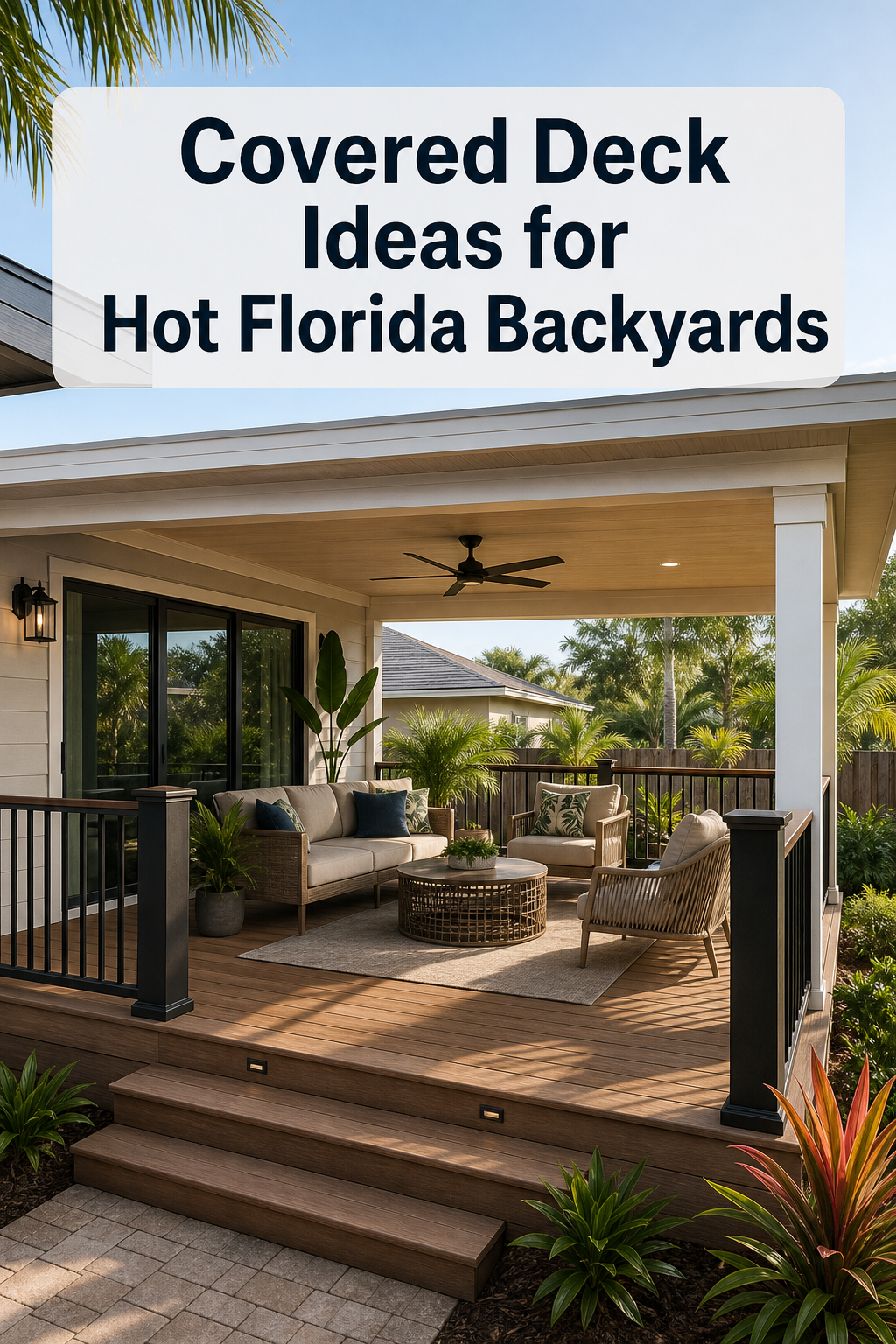
Florida backyards need more than a nice deck surface. Between afternoon sun, humidity, quick rain, and long outdoor seasons, the best covered deck ideas make the space comfortable enough to use often.
Quick answer: For a hot Florida backyard, a covered deck should combine dependable shade, airflow, durable materials, useful lighting, and a layout that still feels open. Roof extensions, pergolas, privacy screens, ceiling fans, composite decking, and covered seating zones can turn a deck from a sunny platform into a real outdoor room.
This guide walks through practical covered deck ideas homeowners can use when planning a backyard upgrade in Tampa Bay, Brandon, Riverview, and nearby Florida communities.
Start With the Real Problem: Heat, Rain, and Use
A covered deck should solve how the backyard actually feels at 3 p.m. in July. If the deck gets full sun, the first decision is not railing color or furniture. It is shade.
Florida homeowners usually need a mix of three things:
- Shade from direct sun
- Ventilation so the covered space does not feel trapped
- Materials that can handle moisture, heat, and regular use
That is why a covered deck works best when it is designed as a comfort system, not just a roof over boards. The roof, railings, stairs, ceiling, fans, lights, and furniture layout all affect whether the space gets used.
1. Roof Extension Over the Main Seating Area
A roof extension is one of the strongest covered deck options when the goal is daily use. It creates real shade, helps protect furniture, and makes the deck feel connected to the home.
The best use case is a seating or dining zone near the back door. That gives the homeowner an easy transition from kitchen or living room to outdoor space.
Design notes:
- Match the roofline and trim so it feels original to the house.
- Keep the opening wide enough so the deck still feels airy.
- Add recessed lights or a ceiling fan during the build, not as an afterthought.
- Think through where rain runoff will go before the roof is built.
This is the most permanent option, so it needs careful planning. Done right, it can make the deck feel like an outdoor living room instead of a separate backyard platform.
2. Pergola Shade for a Lighter Covered Look
A pergola is a good fit when the homeowner wants partial shade without closing in the backyard. It can soften the sun, define a seating area, and add height to a flat deck design.
Pergolas work especially well over:
- Lounge furniture
- Outdoor dining tables
- Grilling prep zones
- Walkways between the house and a larger deck
For Florida backyards, the key question is how much shade the pergola needs to provide. A decorative pergola with wide spacing may look good but still leave the deck too hot. Tighter slats, shade panels, or climbing shade features can make it more practical.
S&V already has a live pergola service path that can support this topic: pergola builders in Tampa
3. Ceiling Fans for Covered Deck Comfort
Once a deck has a solid cover, airflow matters. A ceiling fan can make the difference between a covered area that looks nice and one that feels usable during humid months.
For a covered deck, fan placement should match the main seating zone. If the layout has both dining and lounge areas, one fan may not be enough. The electrical plan should be decided early so wiring, switches, and fixture boxes are placed cleanly.
Good covered deck planning asks:
- Where will people actually sit?
- Does the fan need to cover a table, sofa, or both?
- Will the ceiling height feel comfortable?
- Is the fixture rated for covered outdoor use?
Avoid treating fans as decoration only. In Florida, they are part of the comfort plan.
4. Composite or Low-Maintenance Decking Under Cover
Covering a deck can reduce direct sun and rain exposure, but the deck surface still needs to handle moisture, foot traffic, furniture, and outdoor living.
Composite and other low-maintenance decking options are often attractive for homeowners who do not want frequent sanding, staining, or painting. The right material choice depends on budget, design preference, sun exposure, and how the deck will be used.
For covered decks, surface color matters too. Very dark boards can look sharp with black railing, but they may hold more heat in sunny areas outside the covered zone. A balanced design might use a warm medium-toned board with darker railing or trim accents.
5. Black Railings for a Clean Modern Frame
Black railings are popular because they frame the view without pulling too much attention. On a covered deck, they can also tie together ceiling fans, light fixtures, door hardware, and furniture.
The risk is going too heavy. If the home has light siding, white trim, and tropical landscaping, black railing works best as an accent, not the whole personality of the space.
Good pairings include:
- Warm wood-tone decking with black railing
- White columns with black balusters
- Cream ceiling panels with black fan hardware
- Green landscaping outside the rail line
That mix keeps the deck modern without making it feel cold.
6. Privacy Screens Without Boxing In the Yard
Covered decks often sit close to neighboring yards. Privacy is useful, but a full wall can make the space feel smaller and darker.
Better options include:
- Partial privacy walls on one side
- Horizontal slat screens
- Planter-integrated screens
- Pergola-connected privacy panels
- Feature walls behind a seating area
The goal is selective privacy. Block the problem angle without blocking every view.
For Tampa Bay area subdivisions and close-lot backyards, this can be one of the most important design decisions. A privacy screen can make the deck feel comfortable for morning coffee, family dinners, and evening use without turning the backyard into a box.
7. Lighting That Makes the Deck Work After Sunset
A covered deck should not disappear after dark. Lighting makes the space safer and more useful, especially around stairs, doors, railings, and dining areas.
Useful lighting ideas include:
- Recessed ceiling lights under the cover
- Stair lights
- Post-cap lights
- Wall sconces near the back door
- Low-glare lighting around seating areas
The best lighting is planned with the deck layout. If the stairs are the main traffic point, light them. If the table is the main feature, light the dining zone. If the deck is meant for evening relaxing, keep the lighting warm and comfortable, with enough brightness for stairs and food without glare.
8. A Covered Deck Layout That Matches Real Life
The strongest covered deck ideas start with how the family will use the space.
Common layout zones:
- A lounge area for relaxing
- A dining area near the kitchen door
- A grill or prep area with enough clearance
- A step-down path to the yard or pool
- A shaded transition area from house to backyard
Do not crowd every idea into one deck. A smaller covered deck with a clear purpose often works better than a larger deck with no defined zones.
Should the Whole Deck Be Covered?
Not always. A fully covered deck can be comfortable, but it may feel darker or more enclosed than expected. Many Florida backyards work better with a hybrid layout:
- Covered seating near the house
- Open grilling or sun area beyond it
- Pergola or partial shade over a secondary zone
- Steps leading to pavers, pool area, or lawn
This gives the homeowner choices. Shade when the sun is intense. Open sky when the weather feels good.
Planning a Covered Deck in Tampa Bay
For Tampa Bay homeowners, covered deck planning should account for sun direction, drainage, yard size, materials, and how the deck connects to the rest of the outdoor space.
Before choosing a final design, it helps to answer:
- Where does the afternoon sun hit hardest?
- Which part of the deck needs shade first?
- Will the covered area block light inside the home?
- How will rain move off the roof or cover?
- Do you need privacy on one side?
- Will the deck be used more for dining, lounging, or entertaining?
These answers shape the design more than a picture saved from Pinterest.
Ready to Plan a Covered Deck?
If you are thinking through a covered deck, pergola, or backyard deck upgrade in Tampa Bay, S&V Property Solutions can look at the space, talk through options, and help you decide what makes sense for your home.
Start with the free estimate page: free estimate page
You can also review S&V’s Tampa deck builder page here: Tampa deck builder page
FAQ
What is the best covered deck idea for a hot Florida backyard?
The best covered deck idea is usually a shaded seating area with strong airflow, durable decking, and lighting. A roof extension or pergola can both work, but the right choice depends on sun direction, budget, home style, and how the family plans to use the space.
Is a pergola enough shade for a Florida deck?
A pergola can help, but it depends on spacing, orientation, and added shade features. Wide-open pergola slats may be more decorative than functional. For stronger shade, homeowners can consider tighter slats, shade panels, or a more solid covered structure.
Should a covered deck use composite decking?
Composite decking can be a good fit for covered and partially covered decks when homeowners want lower maintenance. It is still important to choose the right color, texture, and product for Florida heat, moisture, and the deck’s actual sun exposure.
Can a covered deck include a ceiling fan?
Yes. Ceiling fans are one of the most useful comfort upgrades for covered decks in humid climates. The fan should be planned during the design phase so wiring, fixture placement, switches, and ceiling structure are handled cleanly.
Where should covered deck pins send Pinterest traffic?
Covered deck inspiration pins should send people to a matching article, idea roundup, or covered-deck service page. Sending inspiration traffic to a generic homepage usually wastes the click because the page does not match the planning question.
Next Planning Steps
Use these matching S&V pages when moving from covered deck ideas into project planning.